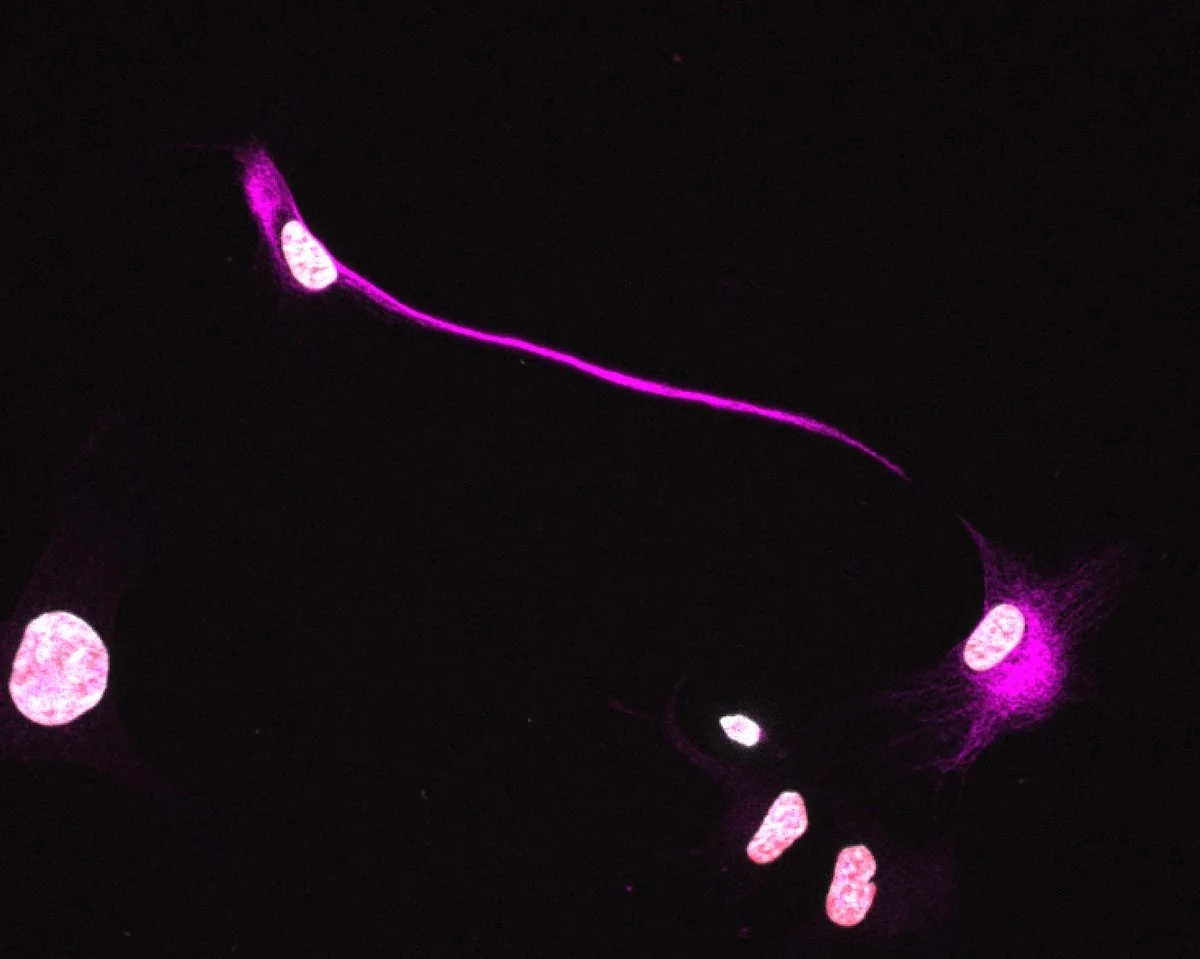
Generation of human models to study NSC quiescence
In recent years, several studies have identified proliferating NSCs and progenitor cells in the adult human brain throughout life. However, quiescent NSCs remain elusive, and the molecular and functional characteristics of this state in human cells remains largely uncharacterized. To bridge this gap, we are developing in vitro models of human NSC quiescence, deriving these cells from induced pluripotent stem cells (iPSCs). This platform enables the molecular profiling of quiescent NSCs and the functional interrogation of disease-associated mutations and genetic backgrounds in the establishment and stability of quiescence in human NSCs.
To date, our results show that the transcriptional profile of human NSCs differs from mouse NSCs, which could have contributed to their elusiveness until now.
In an emerging line of research, we are developing human NSC quiescence models using 3D systems (organoids and spheroids) and incorporating structural, cellular and signaling elements to recreate neurogenic niches.
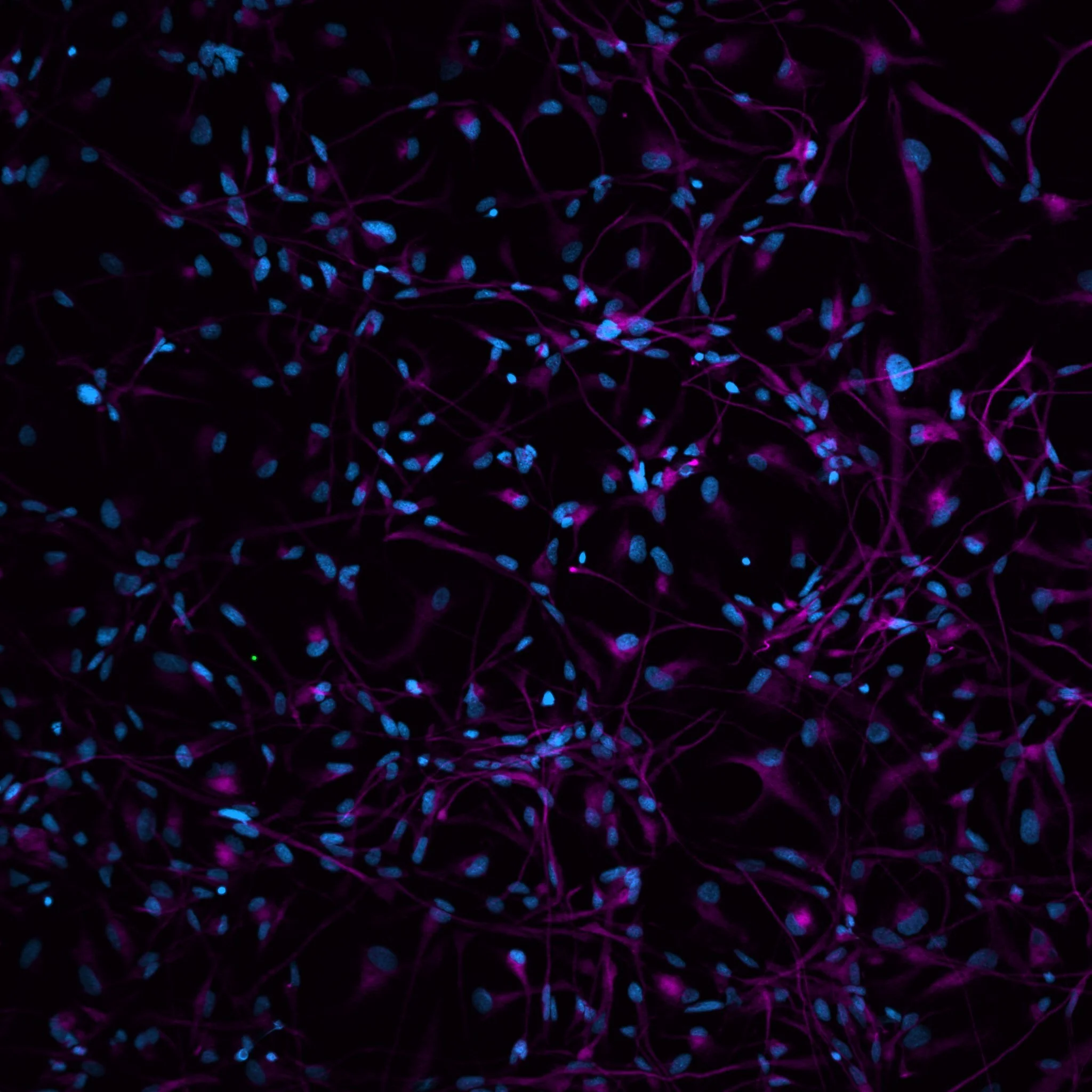
active human NSC, blue DAPI, pink Nestin (©G. Scaravillo)
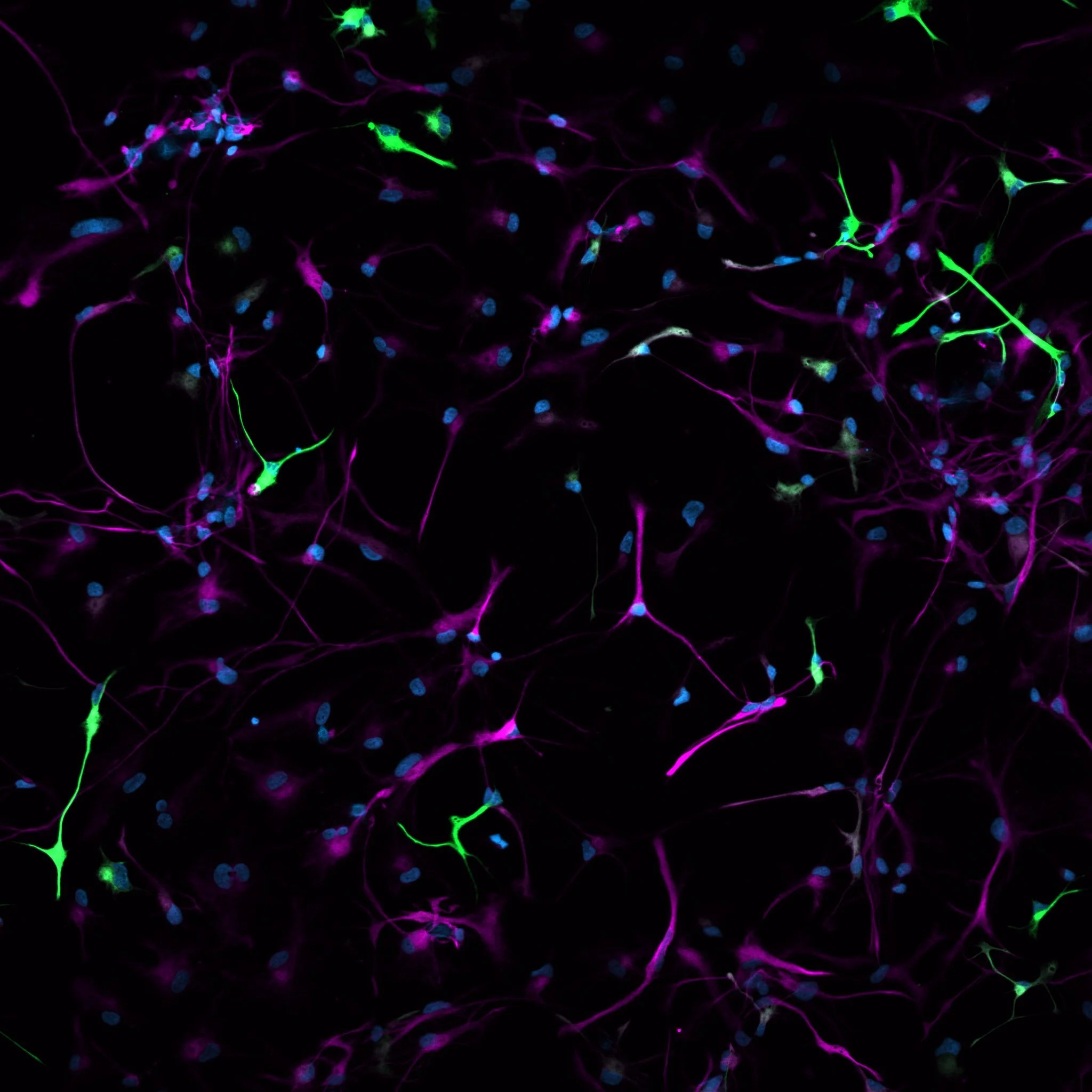
quiescent human NSC, blue DAPI, pink Nestin, green GFAP (©G. Scaravillo)